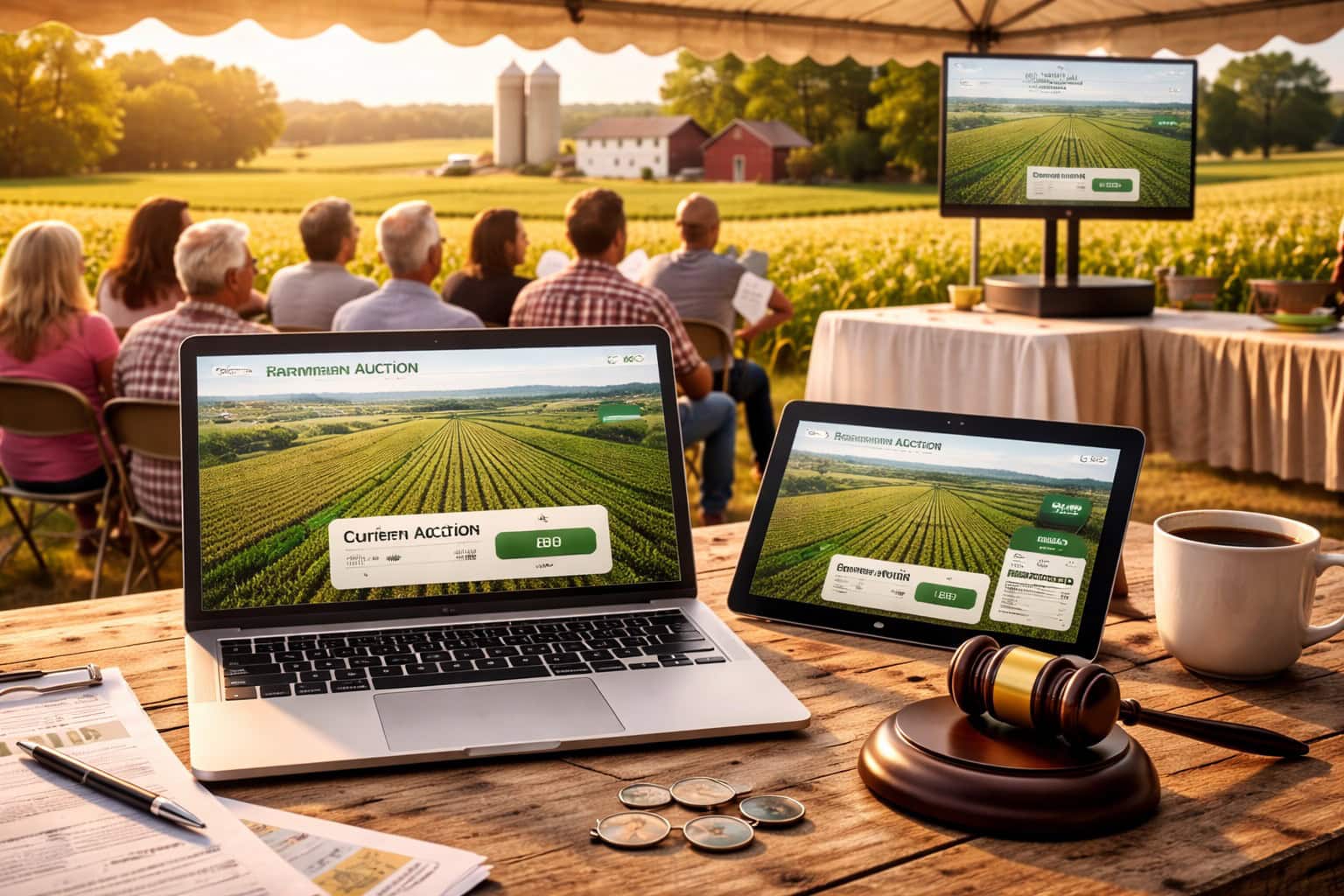
Farmland auctions are no longer just a local event held in a small-town community hall with a ringman, a fast-talking auctioneer, and a crowd of neighbors. That world still exists, and it still works, but the modern auction landscape has evolved fast.
In 2026, technology is reshaping how land is marketed, bid on, and sold. Online auction platforms, hybrid auction formats, and AI-driven tools are expanding buyer reach, increasing transparency, and pushing competitive bidding into a whole new era. For landowners, this can mean stronger sale prices. For brokers, it means the strategy matters more than ever.
If you are selling farmland, ranch ground, or recreational land in today’s market, the question is not whether technology is changing auctions. It already has. The question is how to use it correctly.
Online Auctions and AI Bidding Are Expanding the Buyer Pool
Online farmland auctions have completely removed the old geographic limitations. A buyer no longer needs to live in the county, or even the state, to compete.
Today’s bidder pool often includes:
-
Out-of-state investors
-
Farm operators expanding their footprint
-
Recreational buyers
-
Institutional and fund buyers
-
1031 exchange participants under deadline pressure
That kind of expanded reach increases competition, and competition is what drives sale prices.
AI is Starting to Influence Bidding Strategy
Auction technology is becoming smarter every year. Many platforms now track bidder behavior in real time and provide insights into momentum, bid pacing, and participation trends.
Some auction systems are also experimenting with AI-assisted features that help auctioneers and brokers identify:
-
When bidder activity is peaking
-
When to extend bidding windows
-
When to adjust increments
-
When “stall points” happen in the bid cycle
The takeaway is simple. Auctions are no longer guesswork and instinct alone. Data is becoming part of the strategy, and it can help maximize seller outcomes when used correctly.
Transparency Builds Confidence
Online bidding environments also create a more transparent and level playing field. Every bidder has access to the same terms, documents, and timeline, which builds confidence and reduces confusion.
When buyers trust the process, they bid harder.
Hybrid Auctions: The Best of Both Worlds
Hybrid auctions have become one of the strongest tools in modern land sales. They combine the energy of an in-person event with the reach of online bidding.
This model works well because it captures two buyer types at once:
-
Local bidders who want to be in the room
-
Remote bidders who want to participate without travel
Hybrid formats create a powerful psychological effect. When online bidders see in-person buyers raising their hands and pushing the price, it reinforces urgency. When in-person buyers see online bids coming in fast, it raises intensity in the room.
Hybrid auctions often create the kind of momentum you simply cannot replicate in a traditional listing.
Auction vs Traditional Listing: Choosing the Right Strategy Matters
Auctions are not the right tool for every property. Sometimes a traditional listing with strong marketing and targeted outreach is the best play.
That said, auctions are extremely effective when the market conditions and the property type line up.
Auctions tend to work best when:
-
The land is high-demand and hard to replace
-
Multiple buyers are likely to compete
-
The seller needs a defined timeline
-
The property is part of an estate settlement
-
The property is distressed or being liquidated
-
1031 exchange buyers are expected to participate
If the property is unique, high-quality, and likely to draw multiple bidders, auctions can create urgency and price escalation in a way a traditional sale often cannot.
But if the land is niche, has complicated access, unusual improvements, or limited buyer appeal, a traditional marketing approach may bring a better outcome.
The truth is simple. A good broker does not default to one method. A good broker chooses the method that fits the land.
Streamlining Closings with Automation and AI Tools
Technology is not only changing the auction itself. It is also transforming what happens after the final bid.
Closings are faster today because of improved digital tools that reduce friction in the transaction process.
Automated due diligence tools can assist with:
-
Organizing title work and survey documents
-
Managing buyer document access
-
Tracking deadlines and escrow requirements
-
Reducing missing paperwork and communication gaps
Digital signing is now standard
Remote closings are no longer unusual. Electronic signatures, digital document management, and secure transaction portals have become normal in modern land deals, especially when buyers are located in other states.
This matters because many auction buyers are not local anymore. If your process is still built around paper and office visits, you are going to lose efficiency and credibility.
Challenges of the Digital Auction World
Even with all the advantages, online and AI-driven auctions come with real challenges.
Data security and privacy concerns
Buyers and sellers are right to ask questions about how platforms store information, protect bidder data, and prevent fraud. Professional auction firms and brokers must use reputable platforms with strong security standards and clear transparency.
The digital divide is real
Some older landowners and buyers are uncomfortable with online bidding. That does not mean they cannot participate, but it does mean brokers need to provide support, education, and clear communication.
The technology should not replace relationships. It should enhance them.
The Future of Farmland Auctions
The future is headed toward even more advanced digital tools, including:
-
AI-enhanced market value modeling
-
Automated bidder qualification systems
-
Improved bidder behavior analytics
-
Virtual and drone-based property tours
-
Stronger auction marketing integration with social media and buyer databases
The land market is not slowing down. It is becoming more competitive and more sophisticated.
And brokers who embrace modern auction strategy will have a serious advantage.
Technology Partners Are Driving Innovation in Land Auctions
The evolution of farmland auctions is not happening by accident. It is being driven by auction technology partners that continue to invest heavily in platform stability, bidder experience, data security, and innovation.
Companies like BidWrangler are constantly refining online and hybrid auction technology to improve bidder engagement, reliability, and performance. These improvements matter in real-world land sales because smoother bidding experiences lead to higher participation and stronger competition.
For a deeper look at how auction platforms are evolving to stay ahead of the market, you can read more about how BidWrangler is continuously improving its technology here.
Final Thoughts
Farmland auctions in 2026 look very different than they did even five years ago. Online bidding platforms, hybrid sale models, and AI-driven tools are expanding the buyer pool, increasing transparency, and creating stronger competition.
For landowners, that can mean higher sale prices and cleaner timelines. For brokers, it means the marketing and auction strategy must be intentional and professional.
Auctions are not just an event anymore. They are a system, and when used correctly, they can produce exceptional results.
If you are considering an auction for farmland, ranch land, or recreational property, it is worth having a serious conversation about which sales model will produce the strongest return.