Why Nebraska, Kansas, and the High Plains Should Be Paying Attention Right Now
If you live in Nebraska, Kansas, Wyoming, or Colorado, you’ve probably heard people say something like: “Yeah, we need snow in the mountains.” That’s not small talk or ski resort chatter. That is the foundation of our entire water system, our irrigation economy, and in a lot of cases, our land values. And right now, the Rocky Mountains are flashing a warning sign that most folks are not taking seriously enough.
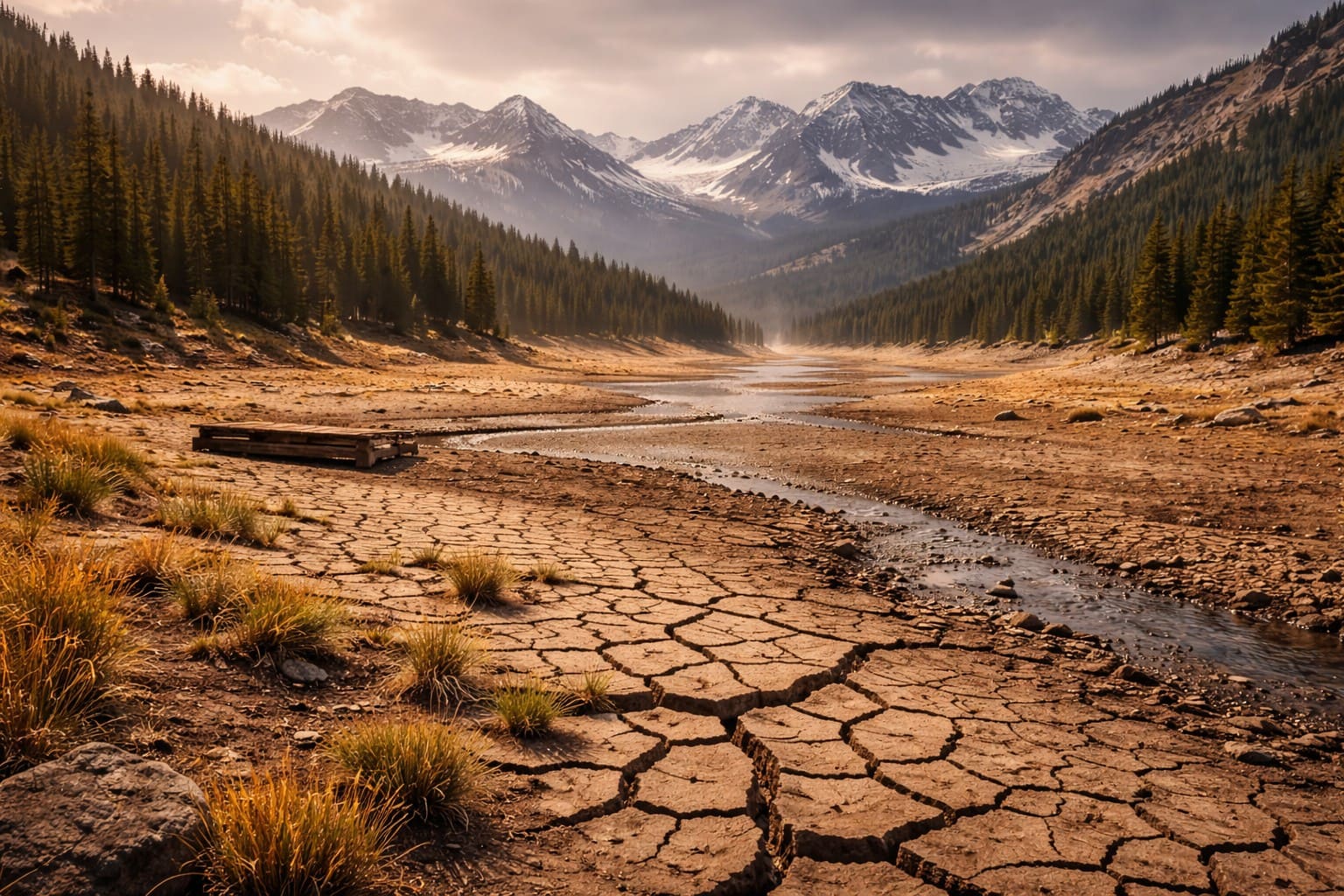
This winter, the West is dealing with what experts are calling the worst snowpack conditions in decades, and in some areas, the worst ever recorded. As of February 1, 2026, snow cover across the Western U.S. hit the lowest level in the MODIS satellite record going back to 2001. Colorado, Utah, and Oregon are showing record-low statewide snowpack. That should get everyone’s attention, from Phoenix to Scottsbluff. Because the snowpack is not just snow. It is the West’s biggest reservoir.
Snowpack Is a Bank Account, Not a Pretty View
Here’s the best way to explain it. Rocky Mountain snowpack is basically our “savings account” for spring and summer. It stores water until the growing season needs it. When that account is low, everything downstream suffers. And right now, that account is dangerously low. Some of the most important numbers from early February 2026:
Upper Colorado River Basin: 61% of median
Colorado River Headwaters: 54%
Gunnison River Basin: 56%
Four Corners Basin: 47%
Salt River Basin (Arizona): 17%
Upper Rio Grande: 48%
Colorado statewide is sitting at record low snowpack with 95% of SNOTEL stations in snow drought. Utah is record low too, with 80% of stations in snow drought. That is not “a dry year.” That is a full-on warning flare.
Here’s the Part That Should Make You Nervous
Even the Snow We DO Get Might Not Turn Into Water
A lot of people think if we get a few late storms, we’ll be fine. That used to be true. Now, it’s not. The report points out a brutal trend called inefficient runoff. In plain English, it means the snow melts, but the water never makes it to the rivers or reservoirs. Why? Because soils are so dry they soak it up like a sponge. And because the melt starts early, evaporation and plant transpiration steal a huge amount of that water before it ever becomes usable streamflow.
In 2025, forecasters predicted 81% runoff, then revised down to 67%, and the basin ended up producing only 41% of average stream flows. That is the definition of “you thought you had water, but you didn’t.” So even if the Rockies get a decent March, it might not matter like it used to.
Lake Powell and Lake Mead Are Still Sliding
And This Isn’t a Southwest Problem, It’s an Everyone Problem
We can’t talk about snowpack without talking about the reservoirs that run the entire Western water system.
Lake Powell is sitting at around:
3,533 feet elevation
25–26% full
Down 32 feet from one year ago
Worst-case forecast could drop it near 3,499 feet, dangerously close to minimum power pool at 3,490 feet
If Powell drops below minimum power pool, Glen Canyon Dam cannot generate hydroelectric power. That is not a theoretical problem, that is a real-world economic disruption.
Lake Mead is also in trouble:
1,065 feet elevation
About 34% full
The system is now at 37% total capacity, down from 42% one year ago
Projections show Mead possibly dropping below 1,050 feet, which triggers Tier 2 shortages
That Tier 2 shortage is where things start getting ugly.
So What Does This Have to Do With Nebraska?
Everything. Here’s where people in the Midwest and Plains states make a mistake. They think the Colorado River drama is “out west.” But the same Rocky Mountain snowpack that feeds the Colorado River also feeds the North Platte, the South Platte, and contributes to the broader Missouri River system. Meaning this snow drought isn’t just a Vegas problem, it’s a Nebraska irrigation problem.
The report lays it out clearly:
Reservoirs on the North Platte system are only 32% to 53% full
Lake McConaughy was around 49% capacity in early January
Lower North Platte snowpack was only 39% of median
South Platte Basin was around 61%
April–July runoff forecast above Glendo Dam: 430,000 acre-feet, which is 47% of the 30-year average
That is a massive deficit. And when runoff is cut in half, allocations are not far behind. That means the 2026 growing season could get real western Nebraska and eastern Wyoming in a hurry.
Kansas Has a Problem Too, and It’s Not Just Drought
It’s Compacts and Groundwater Decline
Kansas is dealing with two pressures at the same time. First, the Republican River Compact. Kansas, Nebraska, and Colorado split that river under a 1943 agreement, and Colorado is already retiring 25,000 acres of irrigated land to meet compact obligations. Second, the Ogallala Aquifer decline. Western Kansas groundwater drops have been documented at over a foot per year in some areas. Even more telling, the report points out farmers in Sheridan County voluntarily cut pumping by 20% and proved that reduced pumping can stabilize the aquifer while staying profitable. That’s not just environmental news. That is land value news. Because water security is what makes farmland a long-term investment instead of a gamble.
This Is the Part Nobody Talks About
Wildfire Risk and Rangeland Damage
Low snowpack doesn’t just mean less irrigation water. It means dry fuels. Colorado fire managers are saying conditions haven’t looked this bad in 30 years, comparing it to the buildup before the brutal fire seasons of 2000, 2002, and 2012. That matters to ranchers, landowners, hunting property buyers, and anyone holding rural real estate in the mountain West. Because fire changes land fast. And not in a good way.
What This Means for Landowners and Land Values
This Is Where My Broker Brain Kicks In
Let’s be clear, if you own irrigated land, water is not a side issue. Water is a major part of the value. A dry year doesn’t just hit yields. It changes buyer confidence, appraisal logic, lease rates, and the long-term outlook for an operation. If allocations drop on the North Platte or restrictions tighten on groundwater pumping, it will show up in land transactions. You might not see it tomorrow. But you will see it.
The report makes it clear that Nebraska often leans on groundwater when surface water is short, but the Ogallala is not an unlimited safety net, especially after multiple dry years. A UNL report cited groundwater declines of 10 to 15 feet in some Nebraska counties after drought conditions. That is not a crisis headline. That is a long-term trend. And long-term trends are what smart landowners pay attention to.
The Biggest Story in All of This
Post-2026 Colorado River Negotiations
Here’s what most people don’t realize. Several major Colorado River agreements expire at the end of 2026, including the 2007 Interim Guidelines and the 2019 Drought Contingency Plans. Federal agencies released a Draft Environmental Impact Statement in January 2026, with public comments due by March 2, 2026. In other words, the rules are being rewritten right now.
And the core dispute is simple:
The Lower Basin wants the Upper Basin to share mandatory cuts
The Upper Basin says the Lower Basin has been overusing water for decades and doesn’t want to take responsibility for it
Snow Pack Blog 2026
If no deal happens, litigation is likely. And if litigation happens, uncertainty becomes the new normal. That uncertainty will ripple into agriculture, development, municipal growth, and eventually… land prices.
My Take as a Land Broker
This Isn’t Panic Time, But It Is Pay Attention Time
I’m not here to preach doom and gloom. But I am here to tell you that water risk is becoming one of the biggest under-discussed forces shaping rural America. We’re watching a system that was designed around 18 million acre-feet of river flow, but modern science says the long-term average is closer to 13 million acre-feet, while legal allocations total 16.5 million. That math does not work. And when the math doesn’t work, somebody eventually gets cut.
If You Own Land, Here Are the Questions You Should Be Asking
Not emotional questions. Business questions.
What is my water right priority?
What happens if allocations drop 20%, 30%, 50%?
What is my groundwater plan if surface water gets tight?
What is my exposure to compact calls?
What does this mean for my long-term crop rotation, stocking rates, or lease structure?
If I’m buying land, what’s the real water security story, not the brochure version?
Because water is no longer a “background factor.” Water is front and center.
Final Thought
The Rocky Mountains are sending signals that we are heading into a tough year. The people who will come out ahead are the ones who treat this like a business variable, not a weather conversation. If you’re a landowner thinking about selling, buying, restructuring, or even just protecting what you already have, this is the time to evaluate your water risk honestly. And if you’re not sure what questions to ask, that’s exactly what we’re here for. At Ironhorse Land Company, we don’t just sell land. We help people understand what the land is worth, and why.
Because the details matter. And in 2026, water is one of the details that matters most.