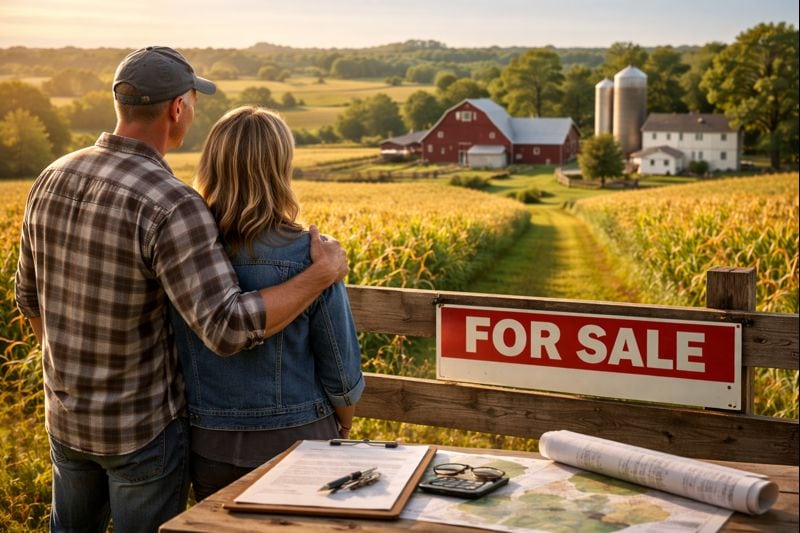
Selling a family farm or ranch in the Midwest is never just a transaction. It is a decision tied to legacy, timing, family dynamics, and ground that has often been worked, improved, and cared for across generations.
Nebraska, Kansas, and Colorado sit at the center of that story. This is productive land, honest land, and right now it is some of the most sought-after ground in the country.
What many landowners do not realize until it is too late is this: selling a family farm in the Midwest is not simple, and it should not be handled by someone who only understands real estate on paper.
Here are five things every landowner should understand before selling a family farm or ranch in the Heartland.
1. Your land is more than acres when selling a family farm in the Midwest
A national broker may see acreage and price per acre, treat it like a formula, and move on. That shortcut often leaves serious money on the table.
Someone who understands Midwest land sees soil types, irrigation history, crop rotations, terraces, drainage, wind exposure, and how the farm actually performs in both strong and difficult years. They know the difference between land that looks good on a map and land that consistently produces.
Two farms with the same acreage can carry very different values because of these details. When a broker does not understand why, they are guessing. Guessing with your family’s largest asset is expensive.
2. Water and improvements drive value in Midwest farm and ranch sales
In the Heartland, water is not just important. It is foundational to long-term value.
Irrigation wells, surface water rights, pivot condition, pumping capacity, energy sources, and historic water usage all directly affect what buyers are willing to pay. These details matter even more as buyers focus on long-term performance and risk.
Improvements matter too, even when they do not photograph well. Grain handling systems, livestock water, fencing, corrals, drainage work, and access points all add real utility.
A good land broker documents water and improvements early, explains them clearly, and uses them to support value. When these items get overlooked, buyers find reasons to discount the property during due diligence.
For broader market context, landowners often reference USDA farmland value data and regional ag economics reports to understand how water and infrastructure influence pricing.
3. How land use history affects selling a family farm in the Midwest
How a farm or ranch has been managed over time shows up in both value and buyer interest.
Well-managed cropland carries a different story than ground pushed for short-term yield. Grass that has been properly stocked and rested offers long-term value that buyers recognize. Conservation practices, easements, CRP contracts, and government programs all affect how a property can be marketed and who it appeals to.
Buyers want more than a legal description. They want to understand how the land has been operated, what condition it is in today, and what options exist moving forward.
Telling the true story of the land positions it correctly and attracts better-qualified buyers.
4. The best buyers for Midwest farms are often already known
The Midwest remains a relationship-driven marketplace.
Some of the strongest buyers never rely solely on public listings. They hear about opportunities through neighbors, local operators, and land brokers who are deeply connected to the land community.
When a property does go to market, those relationships often determine how quickly it sells and how clean the offers are. Exposure matters, but trust, reputation, and local knowledge often matter more when it comes to final price and terms.
If your broker does not know who is actively buying in your area right now, or cannot pick up the phone and call them, they are already behind before your listing ever hits the internet.
5. Choosing the right broker when selling a family farm in the Midwest
Selling a family farm or ranch is not about speed or volume. It is about stewardship and outcome.
You only get one opportunity to sell a generations-old asset the right way.
The right land broker understands land, understands people, and understands timing. They know when to push the market and when to protect the seller. They ask better questions, spot issues early, and respect the weight of the decision you are making.
This ground fed families. It built businesses. It deserves to be handled with care.
If you decide it is time to sell, work with someone who understands the Midwest because they live it every day, not someone trying to learn it from a spreadsheet.
If you are considering selling farmland, working with a broker who specializes in selling farmland with a land broker and understands regional markets can make a measurable difference in outcome.
Frequently Asked Questions About Selling a Family Farm in the Midwest
Is now a good time to sell a family farm in the Midwest?
Market conditions remain strong in many Midwest regions, especially for high-quality cropland and well-managed ranches. Timing depends on location, land quality, and family goals.
How is Midwest farmland valued?
Value depends on soil quality, water access, improvements, land use history, and local buyer demand. Acreage alone does not determine price.
Should I use a local land broker or a national firm?
Local land brokers often bring stronger buyer relationships, better market insight, and more accurate valuation for Midwest farms and ranches.